


MAJOR AND MINOR II-V-I
The major and minor ii-V-I/i chord progressions are commonly used in many styles of music, however in jazz, chords within the progression are altered to increase musical tension. The V chord is usually the most tense out of the 3 chords, and therefore has a stronger tendency for resolution. Jazz musicians take advantage of this tension and further heighten it by adding dissonant notes within the V chord and use scales that correspond.
Essentially, the ii-V-I/i progressions are related to the chords you build from scales. Just below, you have a very basic example of the C major scale with basic triads built from each note degree of the scale: C-cmaj, D-dmi, E-emi and so on. When we say ii-V-I, we are essentially referring to the 2nd, 5th and 1st chords of the scale: Dmi (ii), Gmaj (V), Cmaj (I).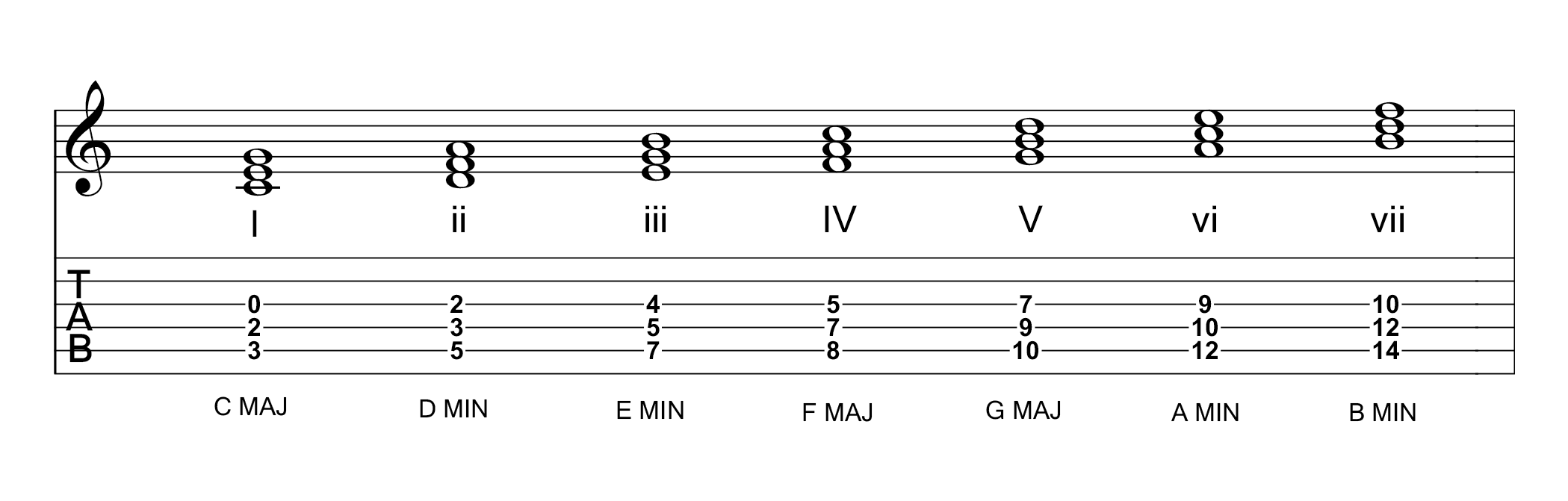

major ii-V-I Example 1
major ii-V-I Example 2
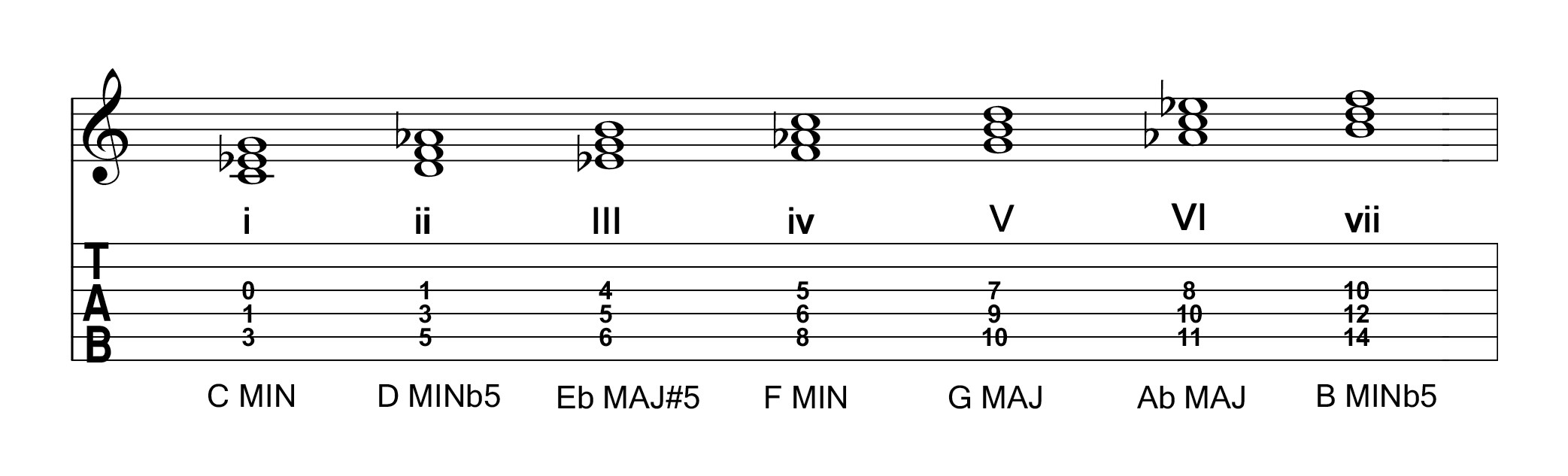
As we see in the above examples, the major ii-V-I is based on the major scale, whereas the minor ii-V-i in this example is based on the harmonic minor scale. By following the same process, the ii chord is Dmib5, V Gmaj, i Cmi, which gives you a ii-V-i in a minor key.
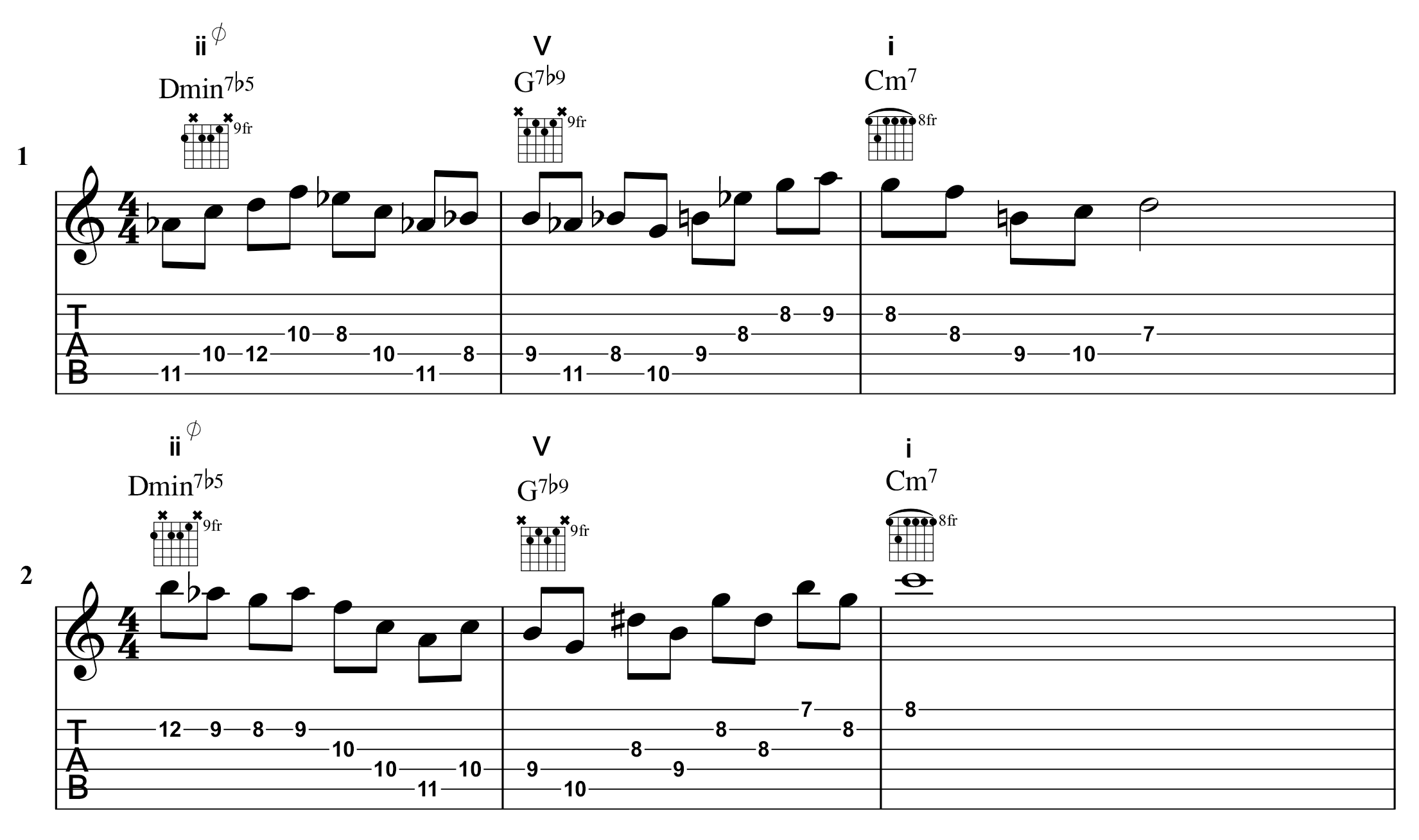
minor ii-V-i example 1
minor ii-V-i example 2