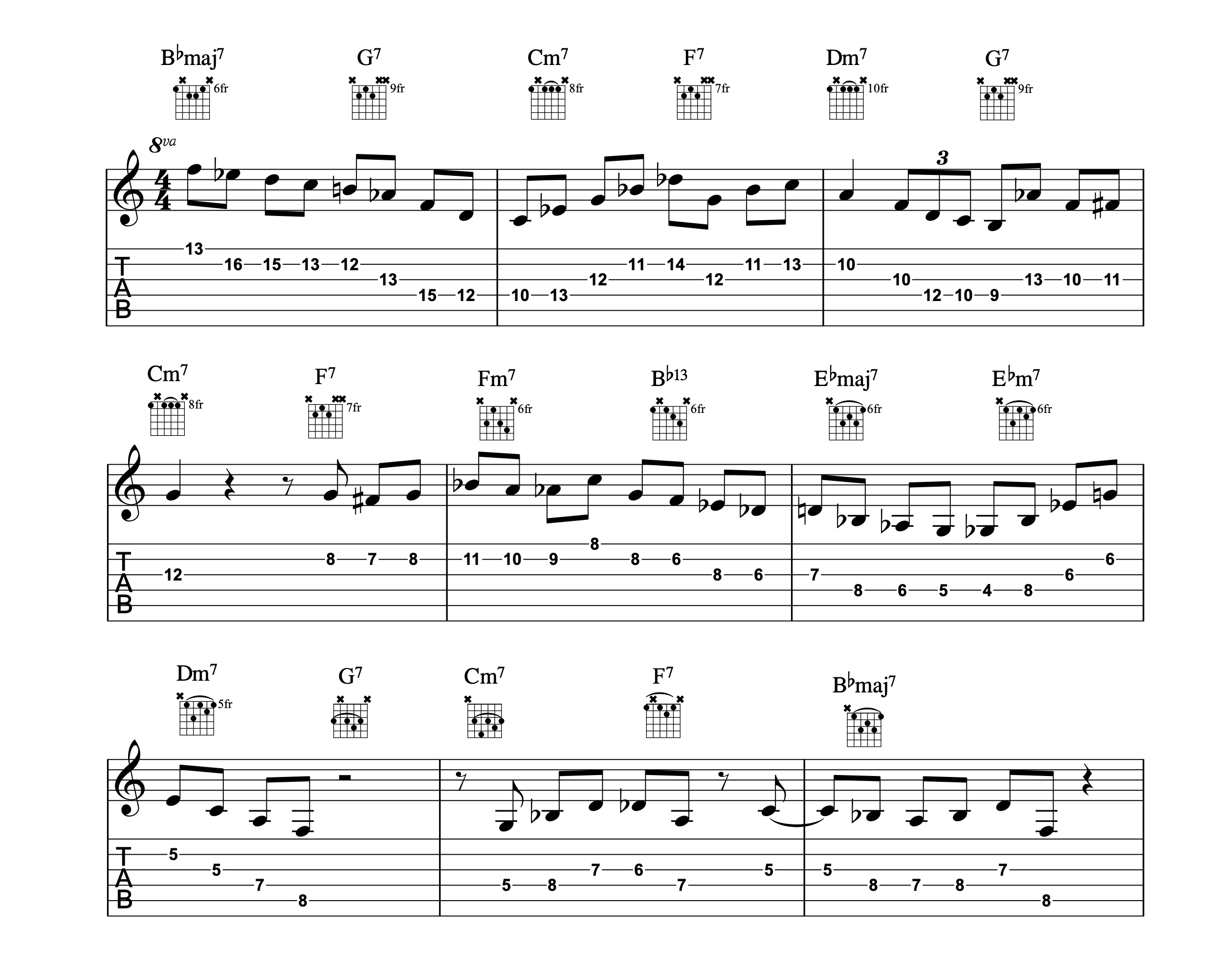
RHYTHM CHANGES I-VI-II-V
Let's take a look at 'rhythm changes'. These changes can take on many forms and permutations, but if you reduce them to their most basic form, they generally make up the I-VI-ii-V progression. In the examples below, I present a few basic lines that outline the progression to get you started.
As a side note: if you reconsider the 12-Bar Jazz Blues example, you will see that it contains the customary I-IV-V standard blues layout, but with added chords. Those added chords are either ii-V-I or I-VI-ii-V. From this you begin to see just how ubiquitous these chord progressions are in jazz and that being able to understand and improvise over them are important steps towards getting that 'jazz sound'.
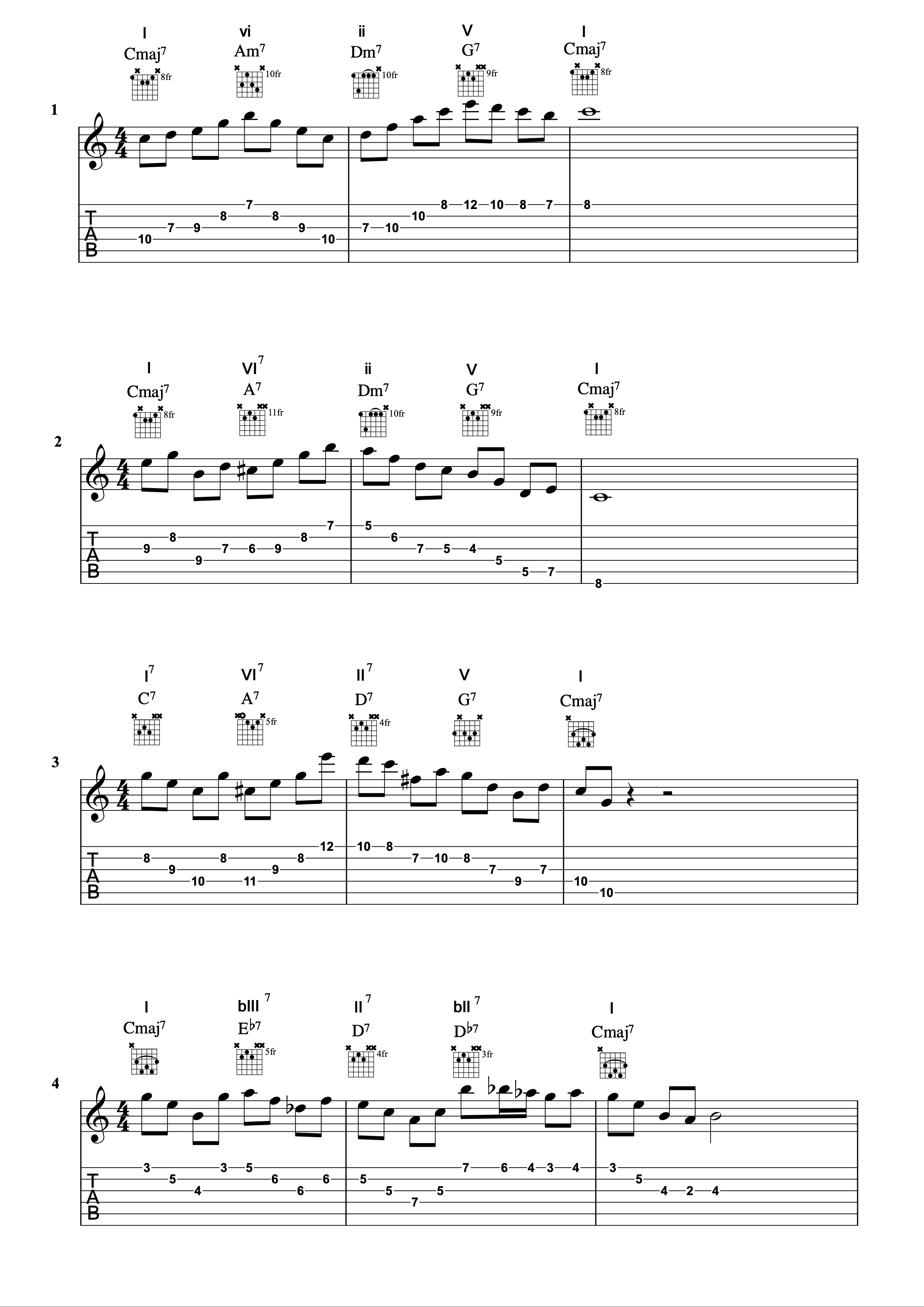
i-vi-ii-v example 1
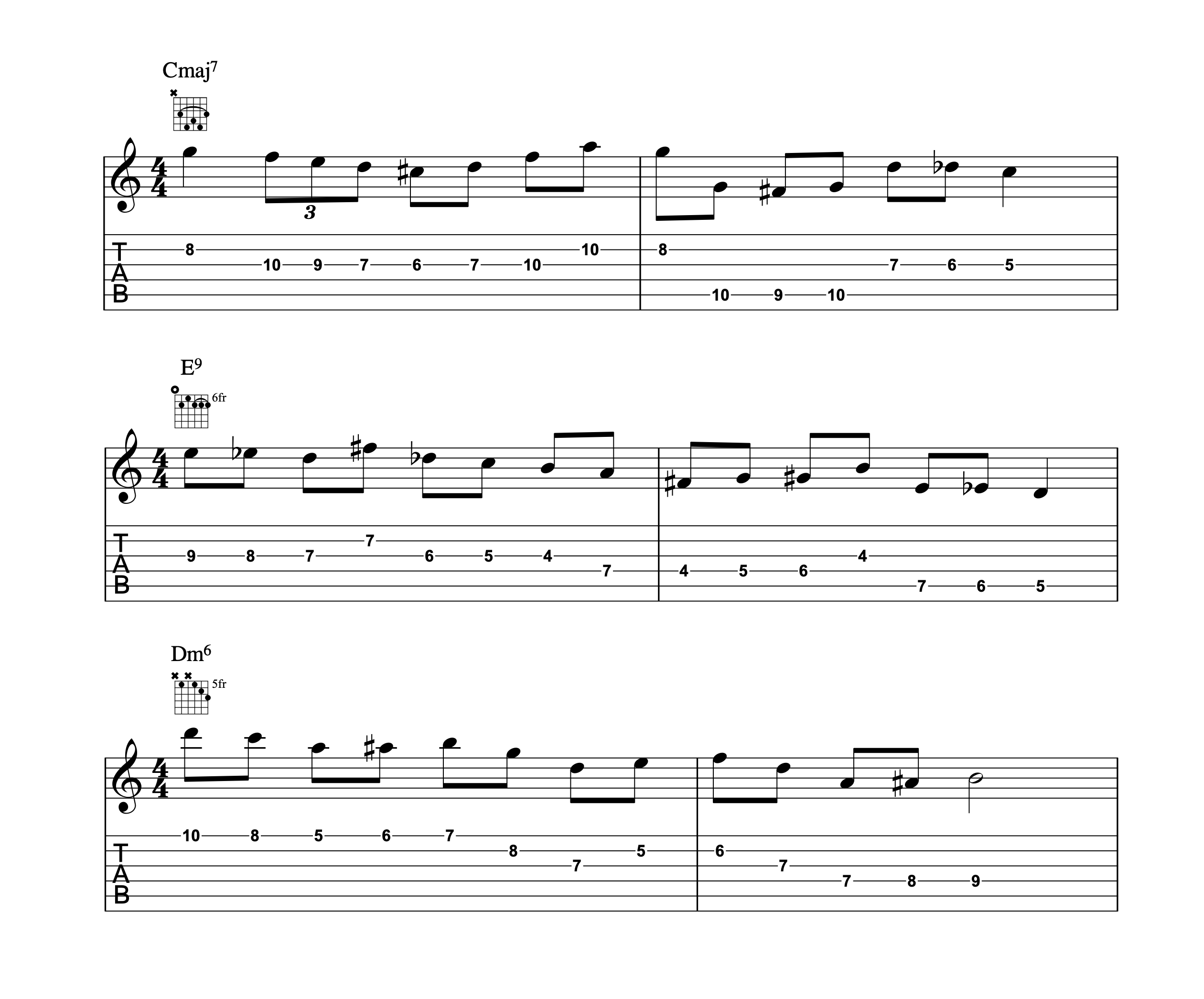
Passing tones are an essential improvisatory tool in jazz facilitating tension and release, and providing the means to effectively move from one chord tone to another with minimum effort when improvising over chord changes. In the examples below, you have one chord with many passing tones to illustrate how colourful these tones can be when used in combination with strong chord tones. Passing tones are generally effective if used as tension building notes to take you from one chord tone to another.
If we combine variations of the melodic examples we've been looking at so far and apply them to 'rhythm changes' we can construct a solo like the one below.