Site Logo
  • LOGO
  • HOME
  • LESSONS
  • LAB
  • MEMBERSHIP
  • CONTACT
LOGIN Bandcamp YouTube

Lab Home
Premium Membership
Monstro Licks
Monstro Blues Licks Monstro Jazz Rock Licks
Rock Lick Legends
Alex Lifeson Billy Gibbons Carl Verheyen Carlos Santana Eric Johnson Frank Gambale Gary Moore Jeff Beck Joe Satriani John Petrucci Michael Schenker Paul Kossoff Ritchie Blackmore Steve Howe Steve Morse
Major Scale Modes
An Angular Approach

Free Resources
Fretboard Improv
12-Bar Jazz Blues Major and Minor II-V-I Rhythm Changes I-VI-II-V Outside Lines and Concepts
Symmetrical Ideas
Whole Tone Scale Diminished Scale
Technique Practice
String Skipping Sweep Picking Hammer On Pull Off Tap
Frank Zappa Analysis
Top 10 Guitar Solos A Short Analysis Of Greggery Peccary Score And Musical Problems Zappa's Ugly Melodies Alien Orifice Guitar Interlude Talking Guitar And Insane Tuplets! Steve Vai's Impossible Guitar Parts Building Chords In Zappa's Moggio How Did Frank Zappa Keep Time? Pedro's Dowry: An Analysis The Chord Bible Intervallic Sequencing My Frank Zappa PhD Thesis
Keneally & Hanspal
Keneally & Hanspal in Finland The Landscape Musician The Album
  •  

RHYTHM CHANGES I-VI-II-V

Let's take a look at 'rhythm changes'. These changes can take on many forms and permutations, but if you reduce them to their most basic form, they generally make up the I-VI-ii-V progression. In the examples below, I present a few basic lines that outline the progression to get you started.


As a side note: if you reconsider the 12-Bar Jazz Blues example, you will see that it contains the customary I-IV-V standard blues layout, but with added chords. Those added chords are either ii-V-I or I-VI-ii-V. From this you begin to see just how ubiquitous these chord progressions are in jazz and that being able to understand and improvise over them are important steps towards getting that 'jazz sound'.
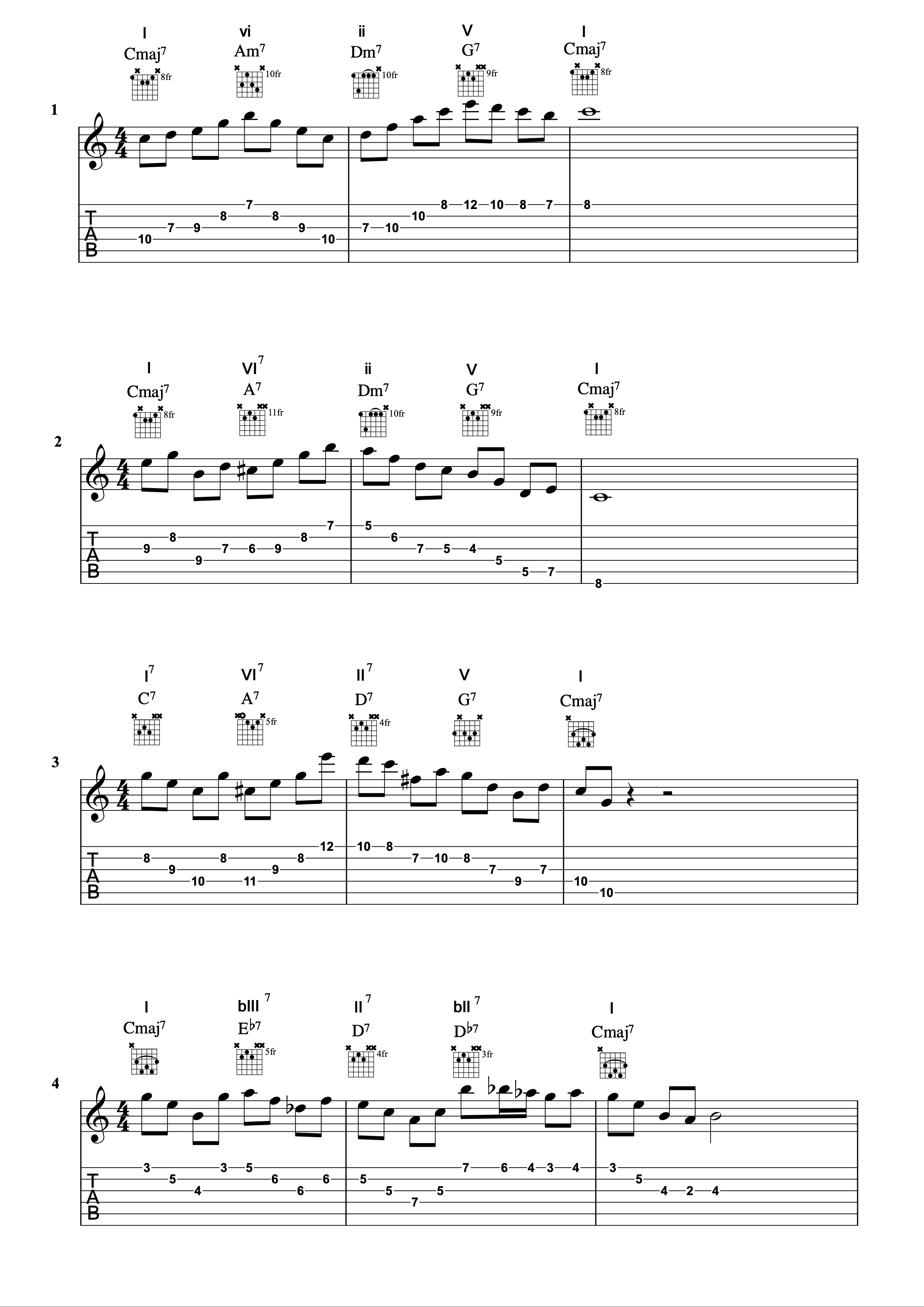
Main Asset Diagram 1

i-vi-ii-v example 1

i-vi-ii-v example 2
i-vi-ii-v example 3
i-vi-ii-v example 4

Passing tones are an essential improvisatory tool in jazz facilitating tension and release, and providing the means to effectively move from one chord tone to another with minimum effort when improvising over chord changes. In the examples below, you have one chord with many passing tones to illustrate how colourful these tones can be when used in combination with strong chord tones. Passing tones are generally effective if used as tension building notes to take you from one chord tone to another.
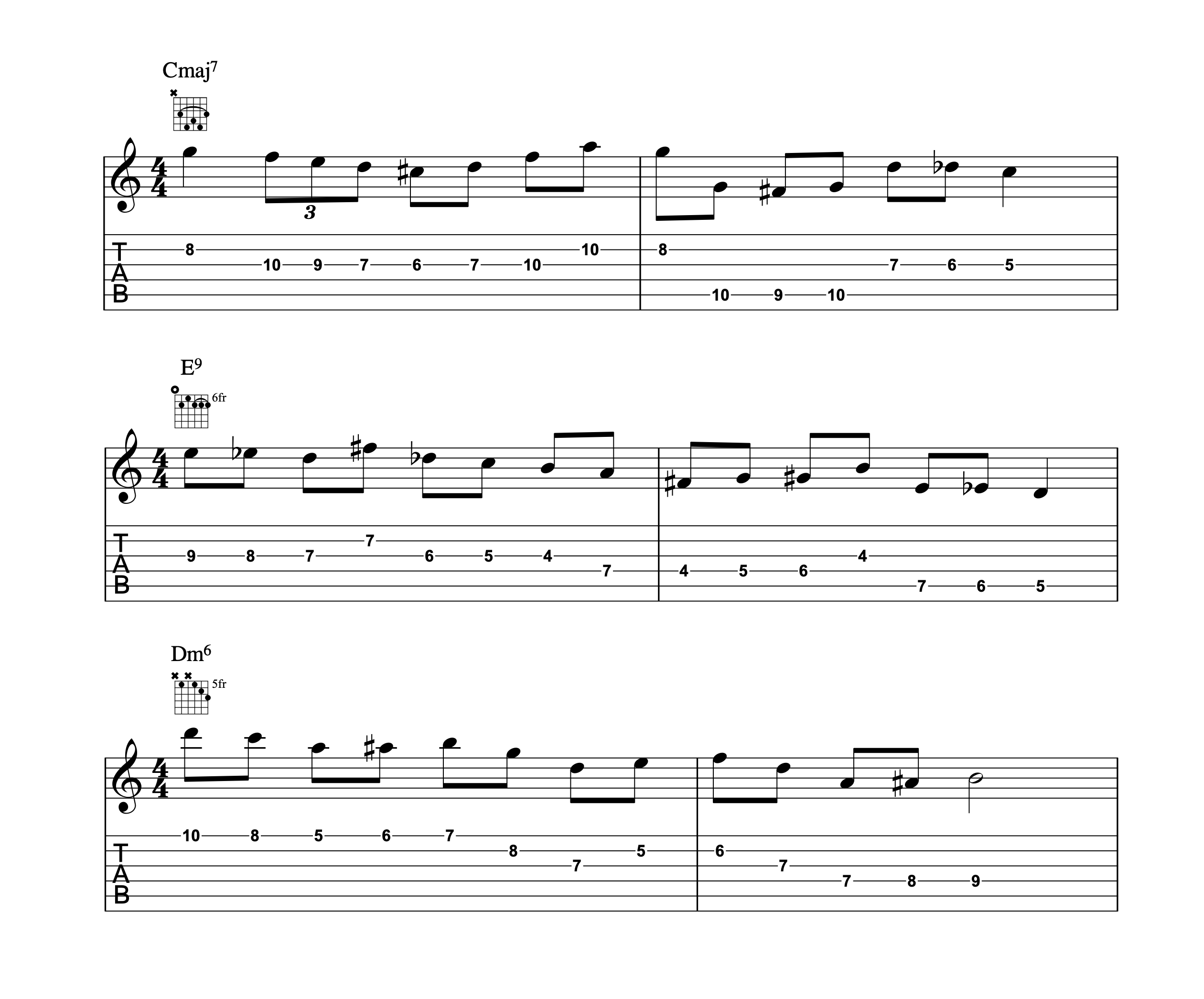
Main Asset Diagram 2
passing tones example 1
passing tones example 2
passing tones example 3

If we combine variations of the melodic examples we've been looking at so far and apply them to 'rhythm changes' we can construct a solo like the one below.
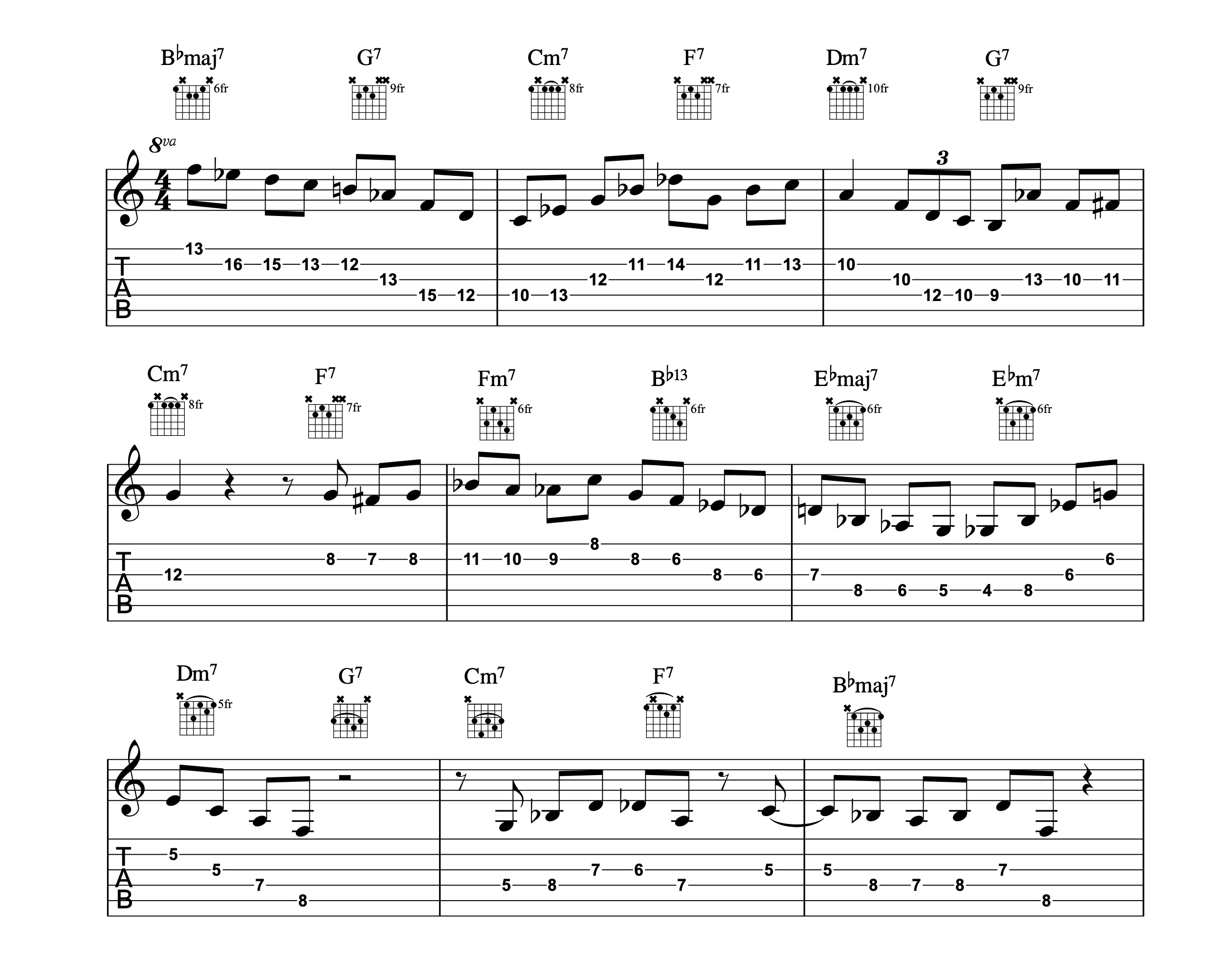
Main Asset Diagram 3
rhythm changes solo example
  • Donate
  • Privacy
  • Terms
Copyright © 2026 chananhanspal.com. All Rights Reserved.